Hus

Wycliffe: Everyone has the right to read the Bible

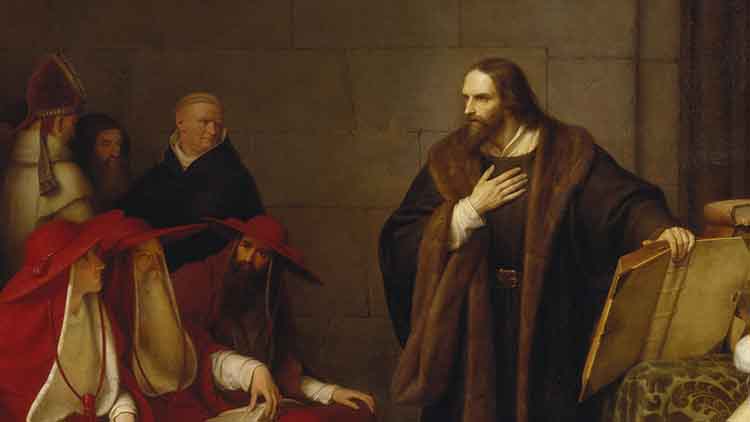
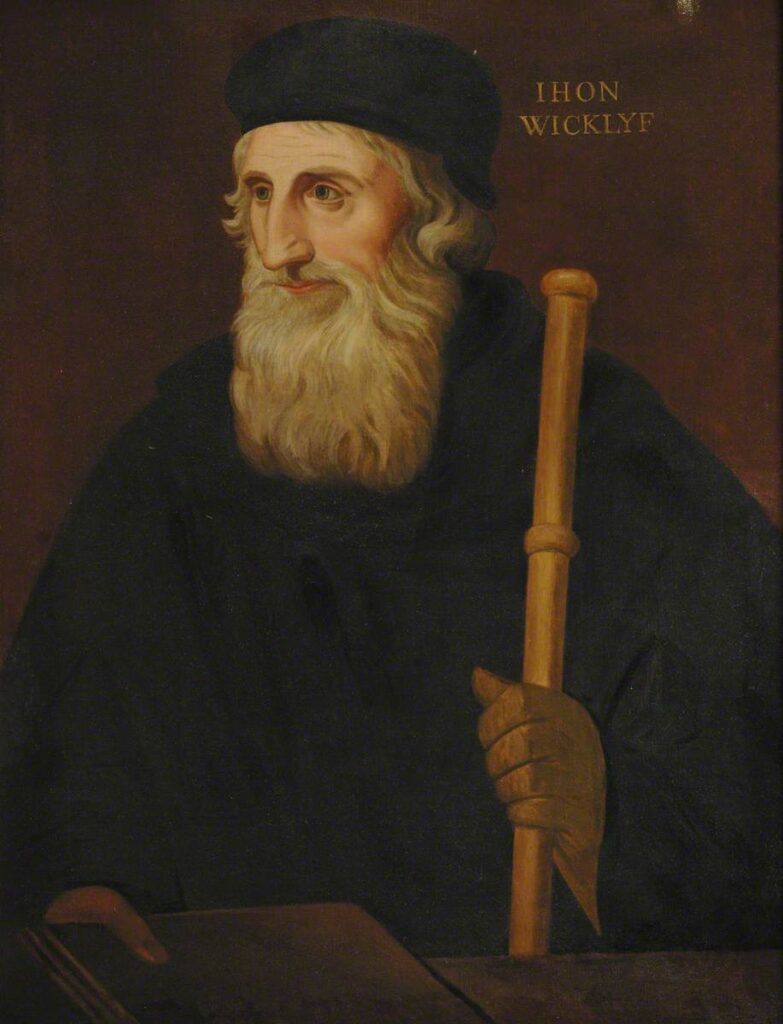
Researcher Dick van Niekerk summarizes the teachings of John Wycliffe:

Jon Wycliffe in a nutshell:

  • The Catholic Mass is a human invention for which there is no basis in the gospel;
  • The belief in the transformation of bread and wine into the body and blood of Christ is (Called transubstantiation, in 1215 proclaimed by Innocent III);
  • The divine status and infallibility of the pope is nonsense; on the contrary, he is the antichrist;
  • There could be no ecclesiastical authority above the deacon and the Thus he rejects the positions of archbishop, cardinal and pope. Therefore decisions of the pope and the councils are without value.
  • The power to ‘open or close heaven’ does not rest with the church or the pope; excommunication is therefore impossible;
  • The rejection of the confession (instituted by pope Innocent III in 1215), pardons, and religious traditions;
  • The rejection of saints and the necessity of pilgrimage;
  • The opposition to clerical wealth;
  • The Bible is Gods word and everyone has the right to read the Bible; the prohibition to do so, as defined in the Council of Valencia (1299), is absurd;
  • Therefore, together with his secretary John Purvey and his assistants, he translated the Latin Bible into English.

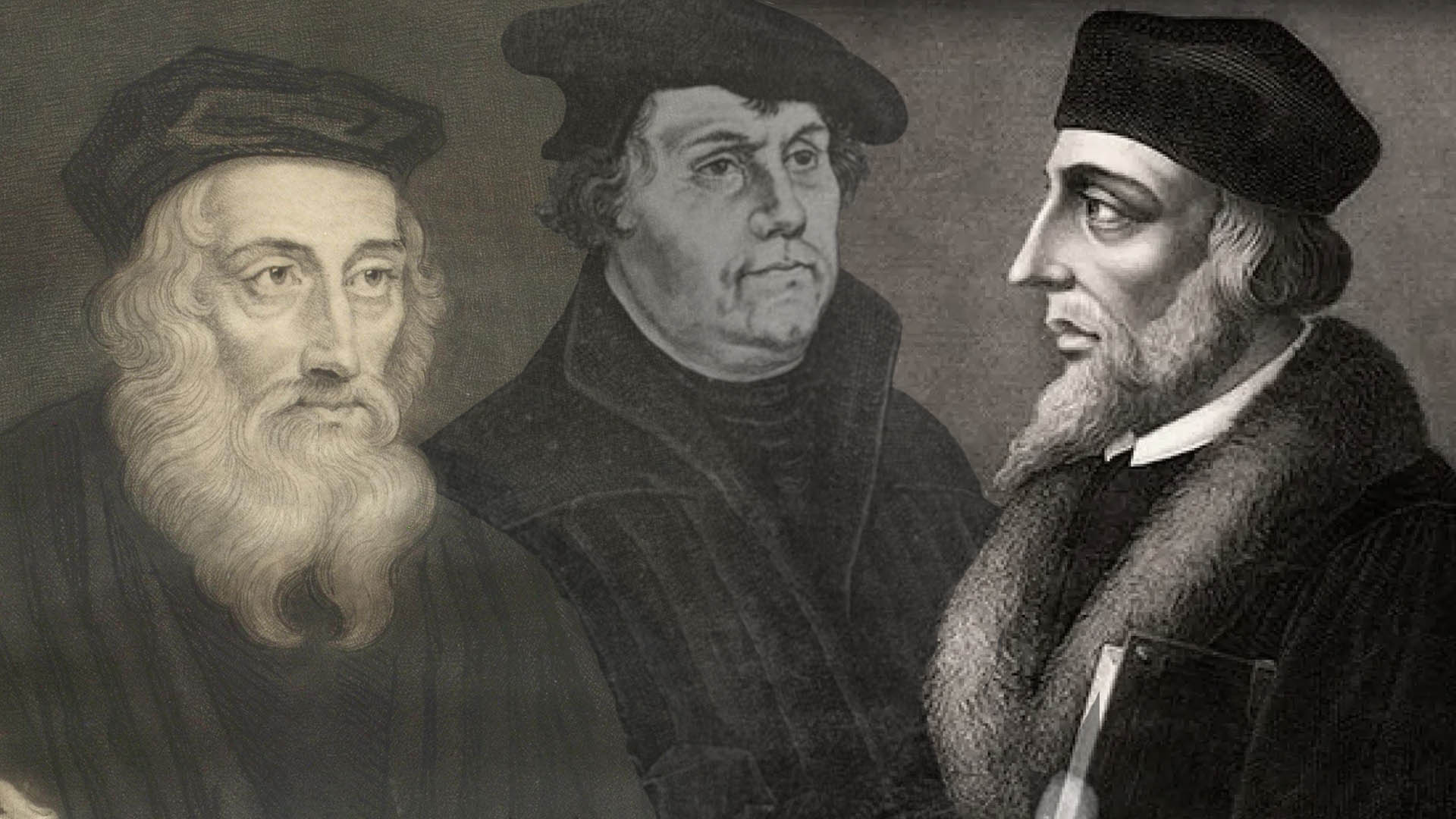
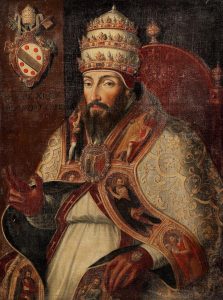
Kirkby, Thomas; John Wycliffe (c.1330-1384); Balliol College, University of Oxford; http://www.artuk.org/artworks/john-wycliffe-c-13301384-221608

Posted by bwana in Hus, 0 comments
Jan Hus: Church Reformer with an ineradicable influence

Jan Hus: Church Reformer with an ineradicable influence

by Dick van Niekerk

Jan Hus (1369 – 1415) was a charismatic preacher who from 1402 onward often spoke twice a day in the famous Bethlehem Chapel in the heart of Prague. According to eyewitnesses he had a magnetic effect on his public. He knew how to win the hearts of his audience by consistently preaching in Czech. Hundreds of believers thronged daily to the Bethlehem Chapel. Amongst them was the wife of King Wenceslas, Queen Sophie, for whom a private auditorium was built within the church, with its own entrance so that she would not have to sit amongst the populace. Hus was also her personal confessor.

The interest of the monarch did not prevent Hus, in addition to his usual exegesis, from speaking out against the wealthy clergy, the laxity of the church dignitaries and the efforts of the church to increase its wealth. ‘These priests… are drunkards whose bellies rumble with drink and they are so greedy that they fill their bellies until their double chin hangs down’. With such statements he put his personal freedom at stake, especially as he continued to question the leadership within the church. ‘The Pope may only be Christ’s deputy on earth when he is a faithful servant of the salvation of Jesus Christ.’ In other words: if someone becomes Pope without directly being chosen by God, must he then be obeyed? Such questions would naturally provoke an explosive reaction by the threatened religious establishment.

In all his works Hus returns to the Bible as the only living source for the issuing of directives and decisions within the church. He relied on the views formed three decades earlier by the English priest and theologian, John Wycliffe, the ‘silent source’ of inspiration for Hus’ theological works.

The treatises of Wycliffe

Hus became familiar with the treatises of Wycliffe thanks to his erudite companion Jerome of Prague, who in 1382 brought them from London to Prague when Richard II of England married Anne of Bohemia. Wycliffe, a great propagandist of the proclamation of the Word of God in the native language of the people, seems to have been influenced by Cathar-Bogomil beliefs.

Hus translated Wycliffe’s theses almost literally into Czech without a moment’s thought about the source from which it came. Plagiarism was then an unknown concept. But in practice Hus took a more nuanced approach than Wycliffe.

In this great church reformer budded a consciousness that emerged as a new religious way of thinking in which the balance between the God of the higher nature and the human being became a personal matter. It demonstrated the intense need that had grown viz. to live by the standards that are called in Czech ‘Swet’, which translates as ‘primordial light’ – the high ideals of the ‘Imitation of Christ’. In the good company of humanists such as Erasmus, Hus laid the basis for a Christianity in which man could follow his own conscience, and spiritual experiences were set above church dogma.

Together his works also acted as a catalyst in a social struggle that would soon ignite the age-old conflict between authority and individual freedom, between centralisation and decentralisation, between the ruling class and the people.

WYCLIFFE: Everyone has the right to read the Bible

In the run-up to the Council of Constance, King Sigismund, who took office in 1411, managed to convince Hus – for the benefit of peace in his kingdom and within the church – to defend his position in the city of Constance. Hus agreed on the condition that the king would promise that he would not be harmed, that he would be granted a letter of safe passage, and that during his travels he would be at the king’s side as a trustee. Hus prepared three impassioned speeches and seemed convinced that he could win the Council over with his vision. At the beginning of October 1414 he began his journey. At first there was still talk of travelling alongside the king, but Sigismund eventually arrived two months later. In truth, they would have had a hard time bearing each other: Hus, the severe ascetic and Sigismund, the power-politician living in Burgundian style. The supervisor, promised by the king was not present when Hus, cheerful and full of confidence, travelled to lake Constance.

An exhaustive battle

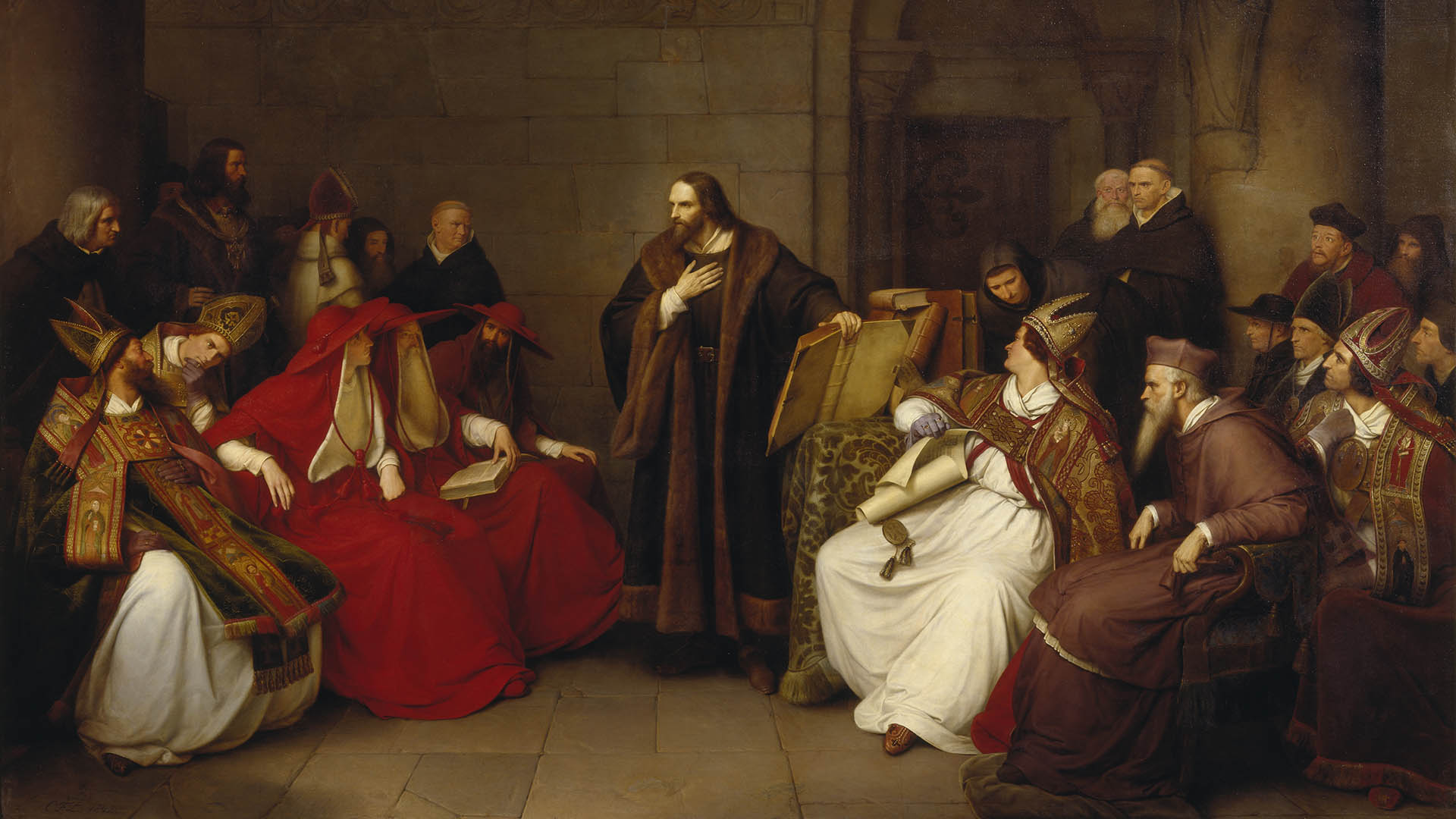
Hus received a warm reception almost everywhere he stayed in Central Europe, however not in Constance. After a few days he was, by order of the cardinals, imprisoned in a dank room, supposedly so that they could come to listen to him. It became an attrition of many weeks of daily interrogations and backbreaking disputes with the College of Cardinals. Hus was served with the ’45 Articles of Wycliffe’ with the request that he renounce them. He renounced a few and he openly questioned whether some others were not incorrectly formulated by the interrogator. But he stayed unwaveringly steadfast to the underlying intention of the articles and to Wycliffe’s church vision: Jesus Christ is the head of the true church.

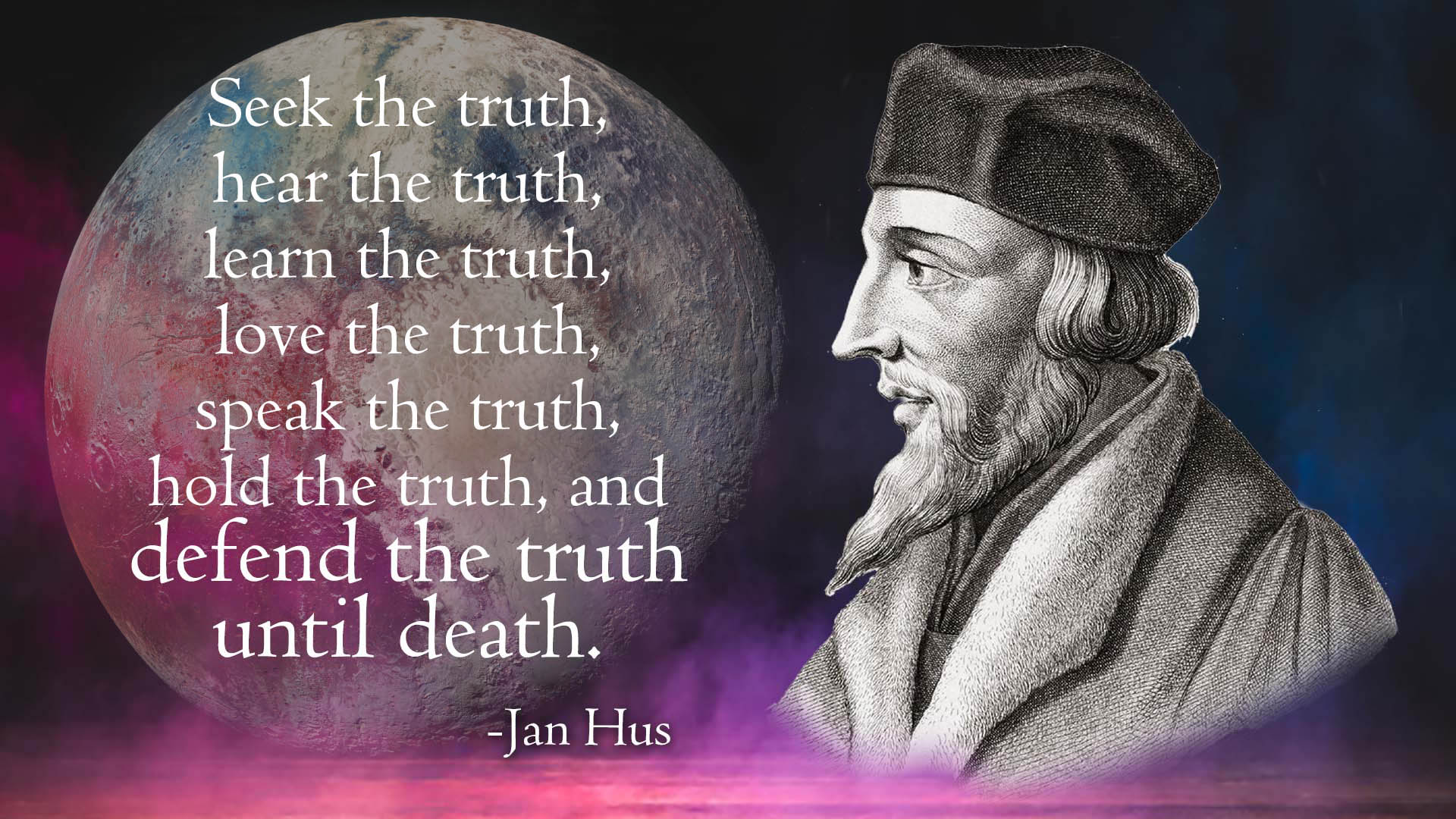
Hus was repeatedly asked to revoke his views. He refused, finding inner strength in John 8:32 (And you will know the Truth, and the Truth will set you free) which he translated in his own statement: ‘seek the truth, learn the truth, love the truth, speak the truth, preserve the truth and defend the truth until death.’

 Leviticus

King Sigismund intervened after several months. He let Hus know that if he did not distance himself from his own views, it would be impossible to guarantee his safety any longer. Sigismund ordained three public debates at which he himself would be present and for which ‘top theologians’ would be deployed. One of them, Johannes Zacharias from Erfurt, planned to ‘catch’ Hus on an irregularity in his interpretation of a few phrases from the Old Testament book of Leviticus. The theologian was the ‘winner’ of the debate and let himself be adorned with a white rose. He is regarded as one of the people who succeeded in committing Jan Hus to the stake.

It was the most striking ‘merit’ of Zacharia’s curriculum vitae, who after his death was interred in a mausoleum under the alter of the cathedral in Erfurt.

Subsequently Sigismund withdrew his support of Hus. On July 6, 1415, during a plenary session of the Council in the Muenster church of Constance, the ‘unrepentant arch-heretic’ Hus, was condemned to death.

O holy simplicity

When the flames held him in their grip, there came an old lady who hastened to add a branch to the pyre. Hus called out ‘sancta simplicitas’ -O holy simplicity and gave his body finally up to the fire. Then the executioners took his ashes in a cart to the Rhine and scattered them in the river. This scattering was a ‘damnatio memoriae’ – an act to erase all memory of the heretic. ‘Is this your safe passage?’ Hus scornfully asked as he passed King Sigismund on his way to the pyre, causing Sigismund to blush heavily. That all-revealing blush of shame was written up in the history books and a century later when Charles V ordered the arrest of the heretic Luther, he referred to Sigismund by commenting ‘And I don’t intend to blush’

On the 30th May 1416 Hus’ friend Jerome of Prague met the same fate at the same location. The Richental Chronicle states ‘When they led him outside, he prayed the creed of faith. He then sang the litany “Christus vincit, Christus regnant, Christus imperat!”– Christ conquers, Christ rules, Christ reigns) and then prayed the creed once more. He did not make a confession. Jerome was a powerful and strong man with a thick black beard; due to his strength he stayed alive during his execution longer than Hus. After his execution his ashes and all the remains of the fire were scattered in the Rhine. Many learned men were deeply saddened by his death as he was a notable master of the free arts in Prague, London, Cologne, and Erfurt.

This article was originally published in “Friesch Dagblad”, newspaper for Fryslån, The Netherlands, July 7 2015

Dick van Niekerk is a researcher, journalist and editor based in the Netherlands.


Posted by bwana in Hus, Middle Ages, 0 comments
Call for Submissions

Call for Submissions

We are currently inviting submission of articles about John Hus, the world in the early 15th century, and the impact of the Hussite movement for publication.  Articles should be written for the general public (not exclusively academic audience) but documentation via footnotes is valuable.  Articles should be 500-1500 words, and should be based on serious research and not solely based on opinion. We particularly invite submissions from Hus scholars, but also welcome submissions from serious amateur scholars.  Authors who have published on Hus are welcome to provide information about their books or articles.

The audience for this site will be primarily interested laypersons. Suggestions for content are also invited.  Original artwork pertaining to Hus is also welcome!

Comenius Foundation created a maintains a similar site about Count Zinzendorf which was published during the 300th Jubilee of his birth.  You can visit that site HERE.

HOW TO SUBMIT:

Digital submissions are preferred.  Email digital file (in Word format or similar) to john@comeniusfoundation.org.  Please place “John Hus Submission” in the subject line.

Hard copy articles may be submitted via mail to

Comenius Foundation
PO Box 22
Lewisville, NC 27023

Should your article be selected for publication, we will send a publication release.


Posted by bwana in Hus, Hussite Wars, Lutheran Reformation, Middle Ages, Unitas Fratrum, 0 comments
Jan Hus, Critical Thinking, and Pluto

Jan Hus, Critical Thinking, and Pluto

by the Rev. John Jackman

We remember Jan Hus for a few things — preaching in the common language, his courage, his martyrdom. But at the crucial center of his life was a profound dedication to truth.
Hus wasn’t just a priest – he was also a philosopher, a thinker. Most people forget that he was appointed dean of the philosophy faculty at the Charles University in Prague before he was called to preach at the Bethlehem Chapel. He was well versed in Plato and Aristotle. Reading his sermons, his writings, we catch a sharp and intensely logical mind behind the preaching.

Hus Symbol

Pravda Vitězi, “Truth Prevails”

We often hear that Hus’ motto was “Veritas Vincit,” which can be translated “Truth Prevails,” “Truth is Victorious,” or perhaps “Truth Wins Out in the End!” This motto has come down through the centuries and is today emblazoned on the flag of the Czech president — in Czech, of course! “Pravda vítězí” is also engraved on the base of the Jan Hus Memorial in Prague.

But what he actually wrote is a little more extensive:

  • Seek the truth,
  • Hear the truth,
  • Learn the truth,
  • Love the truth,
  • Speak the truth,
  • Hold the truth, and
  • Defend the truth until death

Truth was central to Hus’ thought — and for him, there was a crucial and terrifically important distinction between human perception of truth and The Truth. Hus was familiar with Aristotle’s Metaphysics, with Thomas Aquinas’ restatement of the correspondence theory, “A judgment is said to be true when it conforms to the external reality.” He viewed truth as something external to ourselves, something absolute and immutable, but something which we perceive imperfectly. Hus says, “I am convinced that what we know is a whole lot less than what we do not know.” For Hus, that “Capital T” truth is God’s truth, and it is most faithfully expressed on a human level in the person of Christ. And we must test our perceptions against the reality, not simply accept our judgments as being somehow “true.”

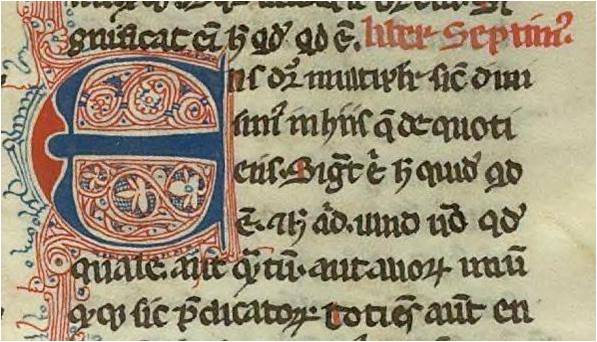
Manuscript of Aristotle's Metaphysics

Aristotle’s Metaphysics, as Hus might have read it.

It may seem obvious to the thoughtful person that our perceptions of truth are not the same thing as truth itself — but in fact it is patently not obvious to most people in history. As children we learn through our senses, we define “reality” as the sensation we have of taste, of touch, of smell. It is normal to think of our experience of reality as being reality, and in consequence most people also confuse their opinions with truth. Physicists can talk of electrons and quarks and strings all they want, that brick wall over there still seems pretty much like a solid impervious bit of reality to me! And in the same way, in a world of spin doctors and manipulated news and echo tank politics, most folks utterly and completely confuse their opinions with absolute truth. Never have we lived in a time where so many “truths” float about without any firm connection to reality. Viewers of TV news and fans of talk radio hear an entirely different set of “facts” than do other people. This reality is utterly self-referencing without any test of reality.

For Hus, there must always be a test against reality. In his day, this included reference to the actual Scriptures (instead of just second and third hand versions through clergy), the writings of Church Fathers, and the entire expanse of Church tradition (instead of just the latest memo from Rome or Avignon or wherever). But what is more, he clearly looks for logic, reason, and even the actual experience of believers – anticipating by several centuries the “Wesley Quadrilateral.”

Hus possesses a rare thing: while being absolutely convinced of his opinion, he still has humility about his own limitations, and is always open to a better explanation. “I’ve made it a principle in my studies that whenever I encounter a more sound opinion, whenever I encounter something that is clearly superior in argument, I am prepared to give up the previous position and adopt the more advanced one.” In every encounter with authority, he made his position clear, and then said “If I am wrong, instruct me! Show me in the Scriptures, in the Church Fathers!” The councils and bishops, of course, were not interested in engaging with Hus on any of these details — they were interested in exerting their authority.

In the past few years I have found a marvelous illustration of Hus’ distinction between truth and human perceptions of truth. In 2006, the International Astronomical Union redefined what would be considered a “planet” — and poor little Pluto was demoted to being a “dwarf planet.” Interestingly enough, that same year the New Horizons probe was launched specifically to fly by Pluto and send back photos and readings. At an initial velocity of 9,000 MPH, bumped to an incredible 53,000 MPH after a slingshot maneuver around Jupiter, it took New Horizons nine years to reach the very distant and tiny dwarf planet. Astonishing pictures were beamed back, and new data received which has revealed far more about Pluto than we knew before. It is, in fact, larger than we previously thought — though not enough to meet the new definition of a planet by clearing other debris in its orbit.

Photo of Former Planet Pluto

Photograph of Pluto from New Horizons spacecraft.

So here’s the point: did the deliberations of the IAU make any difference to the reality of that is Pluto? Pluto existed before it was discovered in 1915. The orbital entity (whatever we label it) didn’t change a bit in 2006 when the IAU “deplanetized” it. Its reality and trajectory didn’t change a smidgeon as New Horizons flew by and took photos. I believe that Jan Hus viewed the rulings of Councils in exactly the same light as we would objectively view the deliberation of the IAU: human deliberations about truth are not at all the same thing as the truth.

Hus’ approach is in fact remarkably a precursor of scientific method. Dr. Thomas Fudge says “But Hus did not blindly follow Wycliffe or anyone else. If you look at Hus’ use of Wycliffe, you will find a discriminating, judicious handling and interpretation. So he wasn’t going to follow the Church blindly, he wasn’t going to follow Wycliffe blindly, even though he admired Wycliffe. So I would say that we find in him the rudimentary seeds of critical thinking where he wanted evidence before he would change his mind or retreat from principle. And I think that it’s not too much to say that this is part of the forerunner stage of the scientific method.”

A long time ago I gave my daughter a bumper sticker that said, “Don’t Believe Everything You Think!” Sadly, too many people in our world today are willing to sacrifice everything on the altar of their own opinions, without any reality check at all. Hus was the opposite — ready to sacrifice himself for the truth.  He was clear on what came first: “Truth is more important than life. It is better to die well than to live badly.”

How I wish that Synods, that Councils, that Courts, that politicians and talk show bloviators could catch just a bit of Hus’ humility and dedication to the Truth. Our world would be a different place and our children’s future would be altogether changed.

Don't Believe Everything You Think!

Don’t Believe Everything You Think! – Bumper Sticker

The Rev. John Jackman is the Executive Director of Comenius Foundation and an award-winning filmmaker.  He has a degree in Philosophy as well as one in Divinity.  In addition to making movies, he serves as pastor of Trinity Moravian Church in Winston-Salem, NC.

Posted by bwana in Hus, 0 comments
Hus’ De Ecclesia

Hus’ De Ecclesia

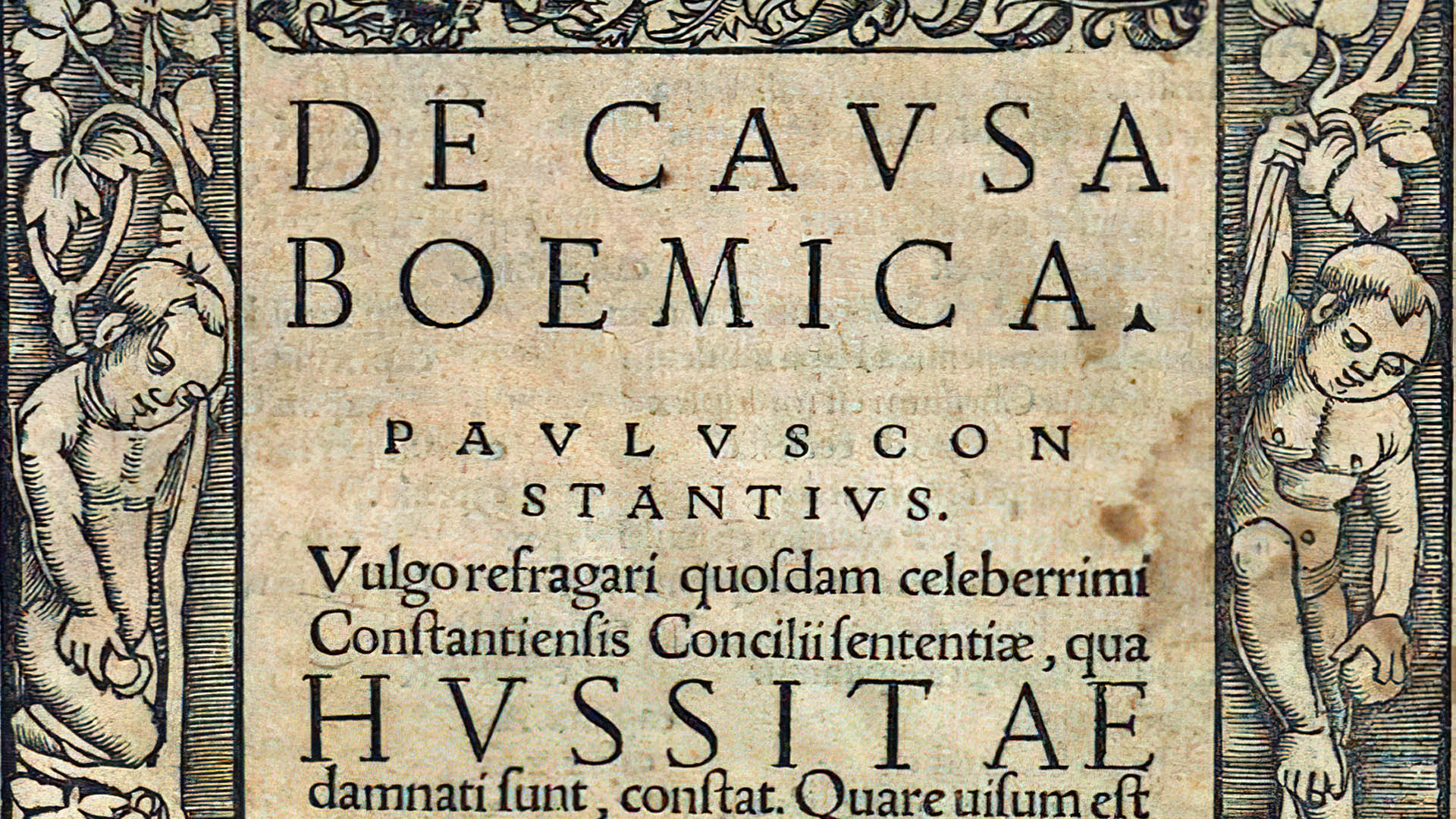
Early edition of "De Ecclesia"

Title page of the first edition of De ecclesia , Haguenau 1520. Bavarian State Library, Munich.

Jan Hus’ most important work, written while he was in exile, was De Ecclesia, “The Church.”  We are pleased to be able to provide a link to a PDF version of the 1915 translation into English by David S. Schaff, DD.

Download or read online:
1915 Translation of Hus’ De Ecclesia.
Courtesy of Archive.org.

From the German Wikipedia:

Jan Hus completed his main theological work, De ecclesia , written in Latin , in the South Bohemian castle of Kozí Hrádek in 1413. Under the protection of Bohemian nobles, he found refuge here when he had to leave Prague after the excommunication and interdict imposed on him .

The work consists of 23 chapters. In the first 10 chapters, Jan Hus systematically explains his understanding of the church. Chapters 11 to 23 are the answer to the indictment of the Prague theological faculty and a sharp rejection of the papal bull Unam sanctam . Hus particularly argues against the theses: “The subordinates are to obey the Roman Church and the rulers in all things” [2] , and “that it is necessary for salvation for every human creature to be subject to the Roman bishop” [3]. He describes the penal measures imposed on him – removal from office, interdict and excommunication – as illegitimate and contrary to church teaching and explains why he did not accept the summons to the papal curia in Rome on charges of heresy .

In his ecclesiology , Jan Hus closely follows John Wyclif, in some places he quotes verbatim passages from Wyclif’s tracts. Just like Wycliffe, he sees the church as a community of those chosen by God for salvation ( predestined ), who form the true body of Christ . But not all who outwardly belong to the Church also belong to the true Holy Church. Those who belong to the true body of Christ live according to the commandments of Christ and thereby demonstrate their love for God. However, anyone who violates the Scriptures does not belong to Christ and does not love God.

The head of the Church is Christ , not the Pope. Hus writes: “Christ is the head of the holy common church; she herself is his body, and each elect is his member and consequently part of the Church, which is Christ’s mystical – that is, mysterious – body”, and further: “Therefore the Pope is not the head and the cardinals are not the whole Body of the holy, universal and catholic Church, for Christ alone is the Head of this Church…”

Hus does not fundamentally reject the hierarchically structured church, but links the authority and powers of its ministers to a way of life based on the example of Christ. The Pope is only to be regarded as Christ’s and Peter ‘s successor and representative if he emulates Peter in his faith, humility and love, the cardinals are only true successors of the apostles if they live in their virtues. But when they set their minds on external wealth, splendor of clothing, and worldly rule, they are not followers of Christ and Peter, but governors of Judas Iscariot .

Hus does not recognize the primacy of the pope . The supremacy of the Bishop of Rome over all other bishops is, according to him, a consequence of the Donation of Constantine , that is, it goes back to a worldly decision and not to Christ. He writes: The “supremacy and appointment of the pope has emanated from the power of the emperor”.

Hus formulates a “Christian right of resistance” : believers have the right, even the duty, to check the orders of their superiors against the Holy Scriptures. Orders contrary to the law of Christ and harmful are not to be obeyed: “if such a thing were commanded by the Pope or by any other spiritual superior, the subject is not obliged to do it…” . On the contrary, the believer is to “resist them in the face when they walk contrary to the divine counsels and commandments.”

Read entire article in German (right-click/Translate To English to read in English)

Posted by bwana in Hus, Hussite Wars, 0 comments
The Four Articles of Prague

The Four Articles of Prague

The “Four Articles of Prague” were a set of demands set forth by Hussites.  It originated from Jakoubek of Stříbro, Hus’ successor at the Bethlehem Chapel, and  the faculty of Charles University in Prague in 1420.  Emperor Sigismund refused to accept the Articles, and instead asked Pope Martin V to declare a Crusade against the Hussites.  The Articles can be summarized:

  • The Word of God is to be freely examined by Christian priests throughout the Kingdom of Bohemia and the Margravate of Moravia.
  • The venerable Sacrament of the Body and Blood of Jesus Christ is to be given in two kinds to adults as well as to children, as Jesus Christ has instituted.
  • The priests and monks, of whom many meddle with the affairs of the State, are to be deprived of the worldly goods which they possess in great quantities and which make them neglect their sacred office; and their goods shall be restored to us, in order that, in accordance with the doctrine of the Gospel, and the practice of the Apostles, the clergy shall be subject to us, and, living in poverty, serve as a pattern of humility to others.
  • All the public sins which are called mortal, and all other trespasses contrary to the law of God, are to be punished according to the laws of the country, by those in charge of them, in order to wipe from the Kingdom of Bohemia and the Margravate of Moravia the bad reputation of tolerating disorders.
Posted by bwana in Hus, Hussite Wars, 0 comments
The Reformation Connection

The Reformation Connection

Hus shared ideas with Wyclif and Luther, yet they were not all of one mind.

by Timothy George

Jan Hus has always been difficult to place precisely in the history of Christian thought. Does he belong to the Middle Ages or to early modern times? Is he a representative of medieval heretical dissent or a precursor of Martin Luther, John Calvin, and the sixteenth-century Reformation? Was he merely a local leader of a Czech movement or a figure of wider European significance?

Recent scholars have protested the earlier tendency to depict Hus as a mere echo of English reformer John Wyclif (whose writings he knew and quoted) or a simple forerunner of Luther. These cautions are well taken.

Furthermore, unlike many other reformers, Hus retained much of Catholic theology. He did not teach the doctrine of justification by faith alone, a fact Luther noted when he observed that, unlike himself, Hus had attacked only the life, not the doctrine, of late medieval Catholicism.

All the same, Luther was not entirely without reason when he applied to himself the prophecy attributed to Hus as he faced the martyrs’ pyre: “Today you will roast a lean goose, but a hundred years from now you will hear a swan sing, whom you will leave unroasted and no trap or net will catch him for you.” Luther posted his theses 102 years later; soon after, he read Hus’s work and realized, “We are all Hussites without knowing it.”  (Editor’s note: There is little evidence that the “swan sing” quote was ever uttered by Hus.  It is almost certainly a legend that grew up later.)

Local roots

 Hus’s work was deeply rooted in the Czech reform movement that was already well under way when Hus was born in 1372. The religious awakening in Bohemia was related to the emergence of the Czech language and the revival of national identity led by Charles IV, king and emperor, who ruled in Bohemia from 1333 to 1378.

Charles wanted his capital, Prague, to be a great political and cultural center, and in 1348 he established there a university modeled on those at Paris and Oxford. The exchange of ideas that flourished at Charles University profoundly affected Hus and others of his era.

Early proponents of church reform included Konrad Waldhauser and Matěj of Janov. These preachers criticized the loose morals of many of their fellow clergy and encouraged the study of the

Bible in the Czech language. Scholars have discovered more than 50 manuscripts of the Bible in Czech, all in circulation before the invention of the printing press.

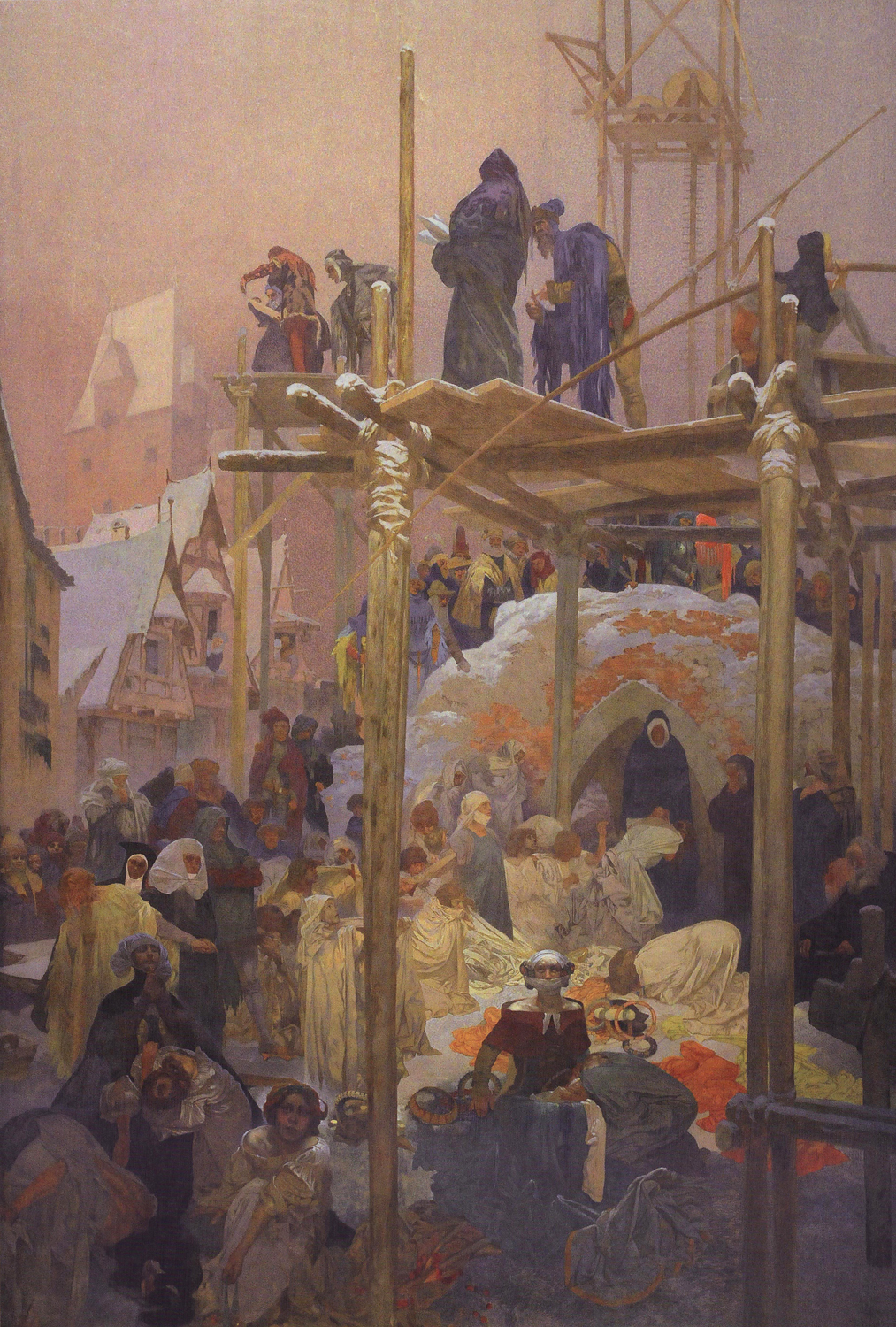
Jan Milíč of Kroměříž: A Brothel Converted to a Convent

Jan Milíč of Kroměříž: A Brothel Converted to a Convent. Painting by Alphonse Mucha (1916) Prague CIty Gallery.

Another key figure in the early Czech reform movement was Jan Milíč from Kroměířž (1325-1375).

Learn more about Jan Milíč

Like Hus, Milíč was both a scholar and a preacher: he broke through the language barrier by preaching in Latin for the university audience, in German for Prague’s upper classes, and in Czech for the workers and common people. He called for personal conversion, but he also emphasized the practical and ethical consequences of following Christ.

In Prague, Milíč established a house he called “New Jerusalem.” It was a haven for prostitutes, one of the most despised and marginal groups in medieval society. The name was taken from the Book of Revelation and indicates the strong eschatological character of the Czech reform movement.

One of the ironies of church history is that frequently those who have the most acute sense of the future reign of God—of living in the “last days”—are precisely those who invest themselves with purpose and energy in changing things here and now. Hus too brought together the sense of living at the edge of history (for example, the Antichrist was one of his major themes) with an earnest hope for the renewal of church and society.

Milíč is called “the Father of the Czech Reformation,” but he was not able to carry forward the reforms he had begun. He died in Avignon while defending his cause before his accusers at the papal court. But in 1391 some of his disciples established Bethlehem Chapel, a public center in Prague for preaching and worship where Hus was appointed chaplain in 1402.

From the pulpit in Bethlehem Chapel, Hus preached with great power and persuasion to a large number of followers. At the same time, he emerged as a leader in the university, serving terms as both dean and rector. Like Luther a century later, Hus was trained in scholastic theology (though he never obtained the doctorate), but he also appealed to the masses and became widely known as a popular religious leader.

The invisible church

 During the two years of exile between his departure from Prague and his trial at Constance, Hus wrote some 15 books. In these he continued to sound the alarm against church abuses, criticizing the papacy and the practice of indulgences. But his most important work during this period was a Latin treatise De Ecclesia (1413), “On the Church.” Hus insisted that the true church was invisible, the Body of Christ comprised of all the redeemed of all the ages, God’s chosen elect known infallibly only to Him.

Read De Ecclesia online.

“The unity of the church,” Hus wrote, “consists in the bond of predestination, since the individual members are united by predestination, and in the goal of blessedness, since all her sons are ultimately united in blessedness.” The “chief abbot” of the church was not the pope but Christ, and it was possible to be in the church (visible) without being of the church (invisible).

This idea was not new. Wyclif had said much the same thing, echoing earlier theologians such as Augustine. But in the context of the religious awakening in Bohemia, Hus’s correlation of predestination and ecclesiology ignited a national reform movement with revolutionary implications.

Near the end of his life, Wyclif had repudiated the entire papal system and called for its abolition. What Hus called for was not the abolition of the institutional church, nor even the separation of the godly from the impure (as some later Hussites believed), but rather the reform of the church based on the example of Christ and apostolic simplicity.

Just the same, Hus’s appeal to the invisible church, as well as his elevation of Scripture as a superior norm for doctrine, proved a solvent to the kind of extravagant papal claims made by Boniface VIII in his famous bull, Unam Sanctam (1302), which made obedience to the pope a condition for salvation.

The Czech “Magna Carta”

 The execution of Hus sent shock waves throughout Bohemia. Nearly 500 Czech nobles gathered in Prague to protest his condemnation and death. They entered into a solemn covenant, pledging to defend the Czech reformation against all external threats.

Out of this gathering emerged the Four Articles of Prague (1419), a manifesto that Czech theologian Jan Milič Lochman has called “the Magna Carta of the Czech Reformation.” Lochman sees these four principles as an extension of Hus’s basic theology.

  1. The Word of God is to be preached.

Like Wyclif, Hus insisted both that the Scriptures be in the language of the people and that they be the normative rule of faith and conduct for all believers. Hus defied his archbishop’s order to cease preaching because he was committed to a prior authority, namely, the expressed law of Christ set forth in the Bible.

During his trial at Constance, Hus insisted that he be corrected out of the Scriptures before he would retract his views. This did not mean, of course, that he had no respect for the tradition of the church, but rather that church tradition could not be placed above the written Word of God.

In an age when printed books were not available, Hus stressed the importance of viva vox evangelii—”the living voice of the gospel.” For Hus, public preaching of the Word of God was an indispensable means of grace and a sure sign of the true church. The Scriptures must be proclaimed freely, without institutional constraints or political interference.

Some later Hussites, especially the Táborites, went even further than Hus in questioning the necessity of a formal preaching office. Táborites thought that all believers, men and women alike, should bear witness to the spirit-anointed Word. This motif was extended by spiritualists and radical reformers in the sixteenth century, some of whom disparaged the external form of the Bible for the “word of faith” and “inner light” within.

  1. The sacrament of the body and blood of Christ is to be served in the form of both bread and wine to all faithful.

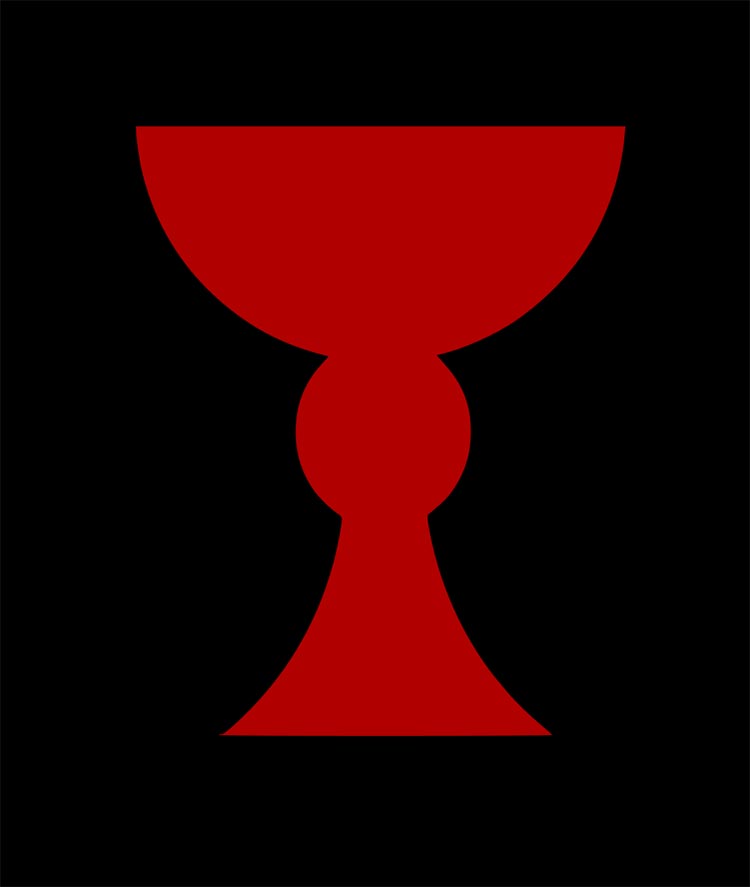
The Chalice became a symbol of the Hussite movement.

The Chalice became a symbol of the Hussite movement.

The practice of withholding the cup from the laity during the celebration of the Lord’s Supper was rooted in early medieval traditions. By 1414, some of Hus’s disciples had begun to share the cup as well as the bread with their communicants. When the Council of Constance condemned this practice, Hus lent his considerable support to the serving of the Eucharist sub utraque specie (under both kinds).

Eventually, the chalice became the defining symbol of the Czech reformation. By sharing both elements with laity as well as clergy, the Hussites were reintroducing what later became known as the priesthood of all believers.

Unlike Wyclif, Hus supported the doctrine of transubstantiation, which to him meant that serving Communion in both kinds was that much more important. When priests withhold the cup from the laity, they actually become “thieves of the blood of Christ,” as the Hussite leader Jacob of Mies put it.

The eschatological dimension of the Lord’s Supper was also prominent among the Hussites. They often celebrated the Lord’s Supper under the open skies on mountaintops. As Jesus had ascended into heaven from the Mount of Olives, so he returned in bread and wine to celebrate with his people the coming kingdom of God.

  1. Priests are to relinquish earthly position and possessions and all are to begin an obedient life based on the apostolic.

The Hussites emphasized obedience and discipleship. They also picked up the earlier emphasis of St. Francis and the Waldensians in advocating a return to the example of Jesus and the apostolic church. Like Milíč with his ministry to the prostitutes and Hus with his devotion to Jesus, the King of the Poor, later Hussites took seriously the mandate to reform both church and society, with special care extended to “the least of these.”

  1. All public sins are to be punished and public sinners in all positions are to be.

In this last article, we hear a plea for intentional Christianity and a protest against the laxity that is endemic to every established religion. Christians should obey and live by the law of Christ and this requires both personal and corporate discipline.

There is an egalitarian thrust in that sinners “in all positions” are to be held equally accountable to the community of faith. This emphasis of the Hussite movement would later be picked up by Calvin and the Reformed tradition with their concern to bring every dimension of human life and culture under the lordship of Jesus Christ.

Many scholars see the Czech reform movement as the First Reformation. Luther claimed continuity with Hus in many respects, although there was a theological chasm between the two on the doctrine of justification. Likewise, Hus was not strictly a Wyclifite, although there were important contacts and some influence between England and Bohemia.

Clearly, Hus stood in an indigenous tradition of Czech reformers who emphasized preaching, studying the Scriptures, and eliminating clerical abuses. Hus’s rediscovery of the Augustinian doctrine of the invisible church enabled him to criticize contemporary church practices in the light of God’s sovereignty over time and eternity.

The motto of Hus’s life was “truth conquers all.” He was not without fault, and we may criticize him for his lack of understanding and theological mistakes. But all Christians can surely respond with gratitude to the kind of faith set forth in this letter written by Hus less than two weeks before his death:

“Oh most kind Christ, draw us weaklings after Thyself, for unless Thou draw us, we cannot follow Thee! Give us a courageous spirit that it may be ready; and if the flesh is weak, may Thy grace go before, now as well as subsequently. For without Thee, we can do nothing, and particularly not go to a cruel death for Thy sake. Give us a valiant spirit, a fearless heart, the right faith, a firm hope, and perfect love, that we may offer our lives for Thy sake with the greatest patience and joy. Amen.”


Timothy George is dean of Beeson Divinity School of Samford University and served as executive editor of Christianity Today magazineREAD BIO

This article first appeared in Christian History Magazine issue #68.  Thanks to the Christian History Institute for allowing us to republish the article here.  For more information on how you can subscribe to Christian History Magazine, visit www.christianhistoryinstitute.org/magazine.

Posted by bwana in Hus, Lutheran Reformation, Unitas Fratrum, 0 comments
Faith Formed in Love

Faith Formed in Love

An excerpt from De Ecclesia (“The Church”) where Hus encourages Christians to trust God but question the Church.

by Jan Hus

Whoever has in common with others faith formed in love, this suffices for salvation when accompanied with the grace of perseverance. For God, who gave the first faith, will give to his soldier clearer faith, unless he puts some hindrance in the way. For God does not demand of all his children that they should continuously during their sojourn here be in the particular act of thought about any particular point of faith, but it is enough that, putting aside inertia and callousness, they have faith formed as a habit.

Faith, we must understand, is twofold: the one unformed, which is exercised by the demons who believe and tremble; the other faith formed in love. The latter, accompanied with perseverance, saves, but not the former. Hence with reference to the faith formed in love the words were spoken: “Whosoever believeth in the Son of God, hath eternal life” (John 3:15). And the Savior said to Peter, who had that faith and professed it: “Blessed art thou, Simon Bar-Jonah.”

This faith is the foundation of the other virtues which the church of Christ practices. Inasmuch as faith is not of things which appear to the senses but of hidden things and inasmuch as it is difficult to believe hidden things, therefore two elements are necessary to faith in order that we may believe anything truly: (1) the truth which illumines the mind, (2) the authority [evidence] which confirms the mind.

Here belongs one property of faith, that it is concerned alone with the truth—all falsehood being excluded—the truth which the faithful ought to defend even unto death.

The second property of faith is, that without proof and special knowledge it is obscure to the faithful, for what we see with the eye we cannot be said to believe. And the saints in heaven who see the articles clearly, which we know obscurely, are not said to believe them but to see. In the place of faith they have clear vision and in the place of hope unending fruition.

The third property of faith is, that it is the foundation [assurance] of the things which are to be believed for the pilgrim who is to come to the peaceful dwelling. Therefore, the apostle says that faith is “the substance,” that is, the foundation, “of things hoped for”: “the evidence of things which do not appear,” that is, to the senses (Heb. 11:1). For now we hope for our blessedness and believe, but do not see with the eyes of the flesh. And, because it is not possible without faith to please God, therefore every one who is to be saved ought first of all to be faithful—fidelis.

A faithful person, however, is he who has faith infused by God and has no fear of ill to himself mixed with his faith. But all open offenders according to the law of present unrighteousness are unfaithful —infideles—[without faith], for it is impossible for any one to sin mortal sin except in so far as he lacks faith. For, if he were mindful of the penalty to be inflicted on those sinning in that way and fully believed it and had the faith which comes from divine knowledge—wherewith God knows all things clearly and is present with such sinners—then, without doubt, he would not sin mortal sin.

A person may lack faith in three ways:

  1. By weakness, and in this way he is lacking who vacillates in believing and does not persist unto death in the defense of
  2. He is lacking in faith who firmly believes the many things to be believed and yet is lacking in many things to be believed, which unbelieved things are as holes, and thus he has a shield of faith which is full of
  3. He is lacking in faith who lacks in the use of this shield; and this happens in this way: that, though he has the firm habit of things to be believed, he nevertheless lacks in acts of meritorious living because of an undisciplined These things are referred to in Titus 1:16: “They confess that they know God, but in deeds deny him.”

Every one, therefore, who is lacking in faith in any of these three ways is wanting in the abiding strength of faith.

And we must remember that faith differs from hope:

  1. In this, that hope has reference to the future prize to be obtained, but faith concerns the past, namely such things as that God created the world, that Christ was incarnate, And it concerns also the present, as that God is, that the saints are in heaven, and that Christ sits at the right hand of the Father. Faith also concerns the future, as that Christ will come again in judgment; that all who have not arisen at that time will arise in the day of judgment; and that God will finally reward in bliss all the saints who finish this present life in grace.
  2. Hope does not reach the knowledge of faith in that which it hopes for, but it rests in a certain middle act between doubt and belief, so that there are many things which are to be set before the faithful to accept which, when the distinction is removed, they should neither doubt, nor grant, nor deny but only hope for. …
  3. Faith also differs from hope in this, that hope is only of good which is possible to him who hopes, but faith is about the evil as well as about the good, for we believe the forgiveness of sin, which is most certainly a good thing for all who are to be saved; and we believe also that the sin of blasphemy will not be forgiven either in this world or in that which is to come.

And for the reason that believing is an act of faith, that is, to put trust in—fidere—therefore know that to believe that which is necessary for a man to secure blessedness is to adhere firmly and without wavering to the truth spoken as by God. For this truth, because of its certitude, a man ought to expose his life to the danger of death.

And, in this way, every Christian is expected to believe explicitly and implicitly all the truth which the Holy Spirit has put in Scripture, and in this way a man is not bound to believe the sayings of the saints which are apart from Scripture, nor should he believe papal bulls, except insofar as they speak out of Scripture, or insofar as what they say is founded in Scripture simply.

For both the pope and his curia make mistakes from ignorance of the truth. And, with reference to this ignorance, it can be substantiated that the pope makes mistakes and may be deceived. Lucre deceives the pope, and he is deceived through ignorance. …

Of one kind is the faith which is placed in God. He cannot deceive or be deceived; of another is the faith placed in the pope, who may deceive and be deceived. Of one kind is the faith placed in holy Scripture; and another, faith in a bull thought out in a human way.

For to holy Scripture exception may not be taken, but it is proper at times to take exception to bulls and gainsay them when they either commend the unworthy or put them in authority, or savor of avarice, or honor the unrighteous or oppress the innocent, or implicitly contradict the commands or counsels of God.

It is, therefore, plain which faith is the foundation of the church—the faith with which the church is built upon the Rock, Christ Jesus, for it is that by which the church confesses that “Jesus Christ is the Son of the living God.” For Peter spoke for all the faithful, when he said: “Thou art the Christ, the Son of the living God.” “This is the victory,” says John, “which overcometh the world—even our faith. Who is he that overcometh the world but he that believeth that Jesus is the Son of God?” (1 John 5:4).


Written in exile, 1413-1414; adapted from translation by David S. Schaff, 1915.

Posted by bwana in Hus, 0 comments
A Plethora of Pontiffs

A Plethora of Pontiffs

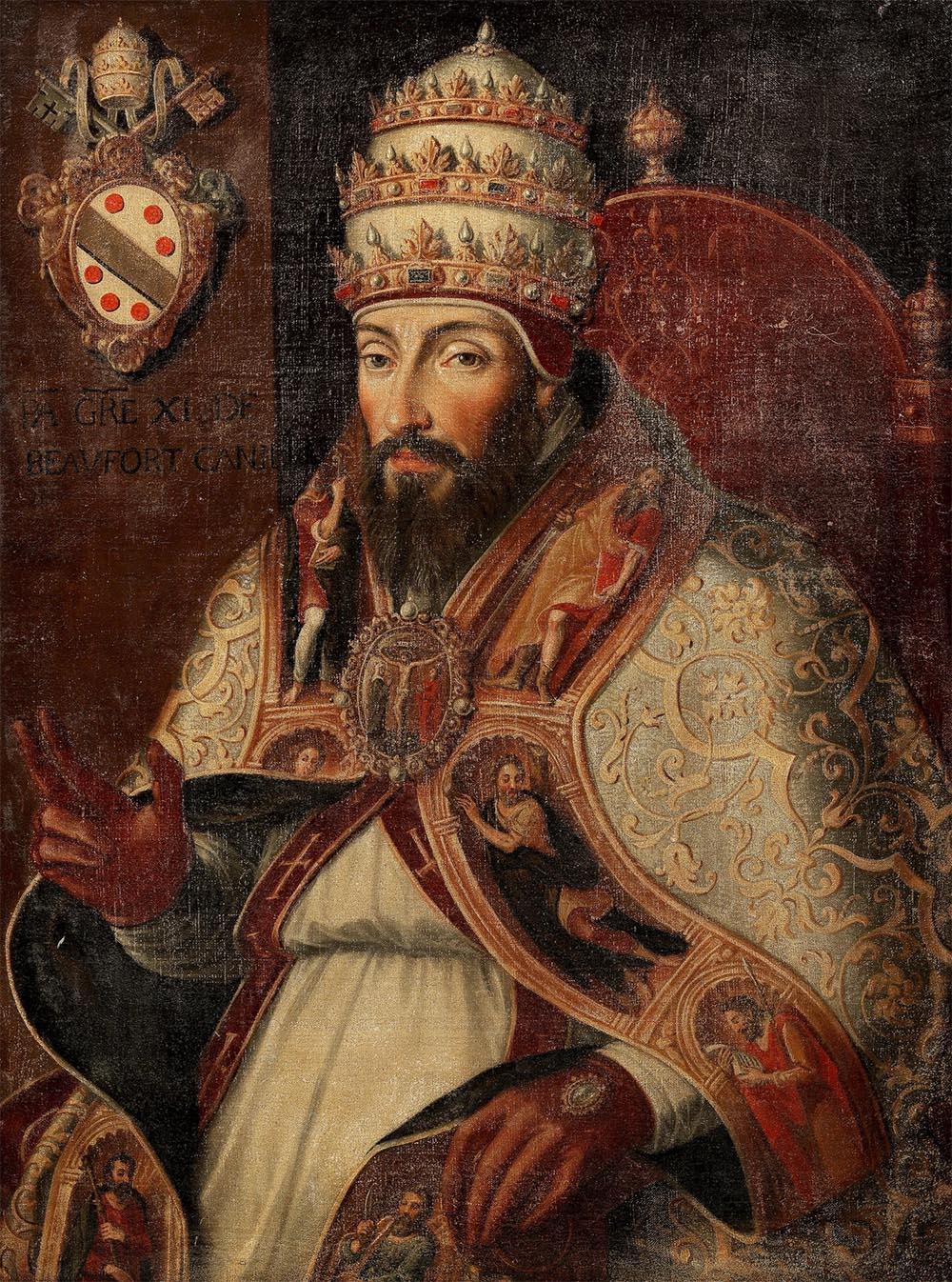
Portrait of Pope Gregory XI

Portrait of Pope Gregory XI. Italian, circa 18th century. Courtesy of MutualArt.

With two popes, then three, vying for power, more was at stake in Constance than Jan Hus.

by Dr. Peter E. Prosser

The trouble started when Pope Gregory XI died in 1378. One year earlier, he had returned the papacy to Rome after 68 years of “Babylonian captivity” in Avignon, France. The shift made Italians happy but enraged the French, putting the cardinals charged with choosing Gregory’s successor in a very tight spot.

Or maybe the trouble started even earlier. The opulence of the papal court at Avignon had alienated many Catholics. As the abbots of the church in Cologne stated publicly in 1372, “The Apostolic See has fallen into such contempt that the Catholic faith in these parts seems to be seriously imperiled.”

King Edward III of England was even more caustic: “The successor of the Apostles was commissioned to lead the Lord’s sheep to pasture, not to fleece them.”

So the church’s problems were obvious. The solution proved elusive.

Pope and anti-pope

 Because the papacy had been based in France for so long, by 1378 a disproportionate number of French cardinals had been created. Their inclination toward another French pope was stifled, however, by the rioting crowd outside the conclave in Rome. The cardinals took a quick vote and elected an Italian who took the name Urban VI. Then they ran for their lives.
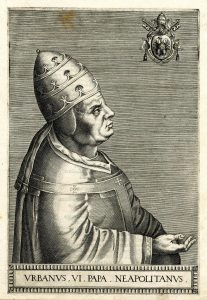
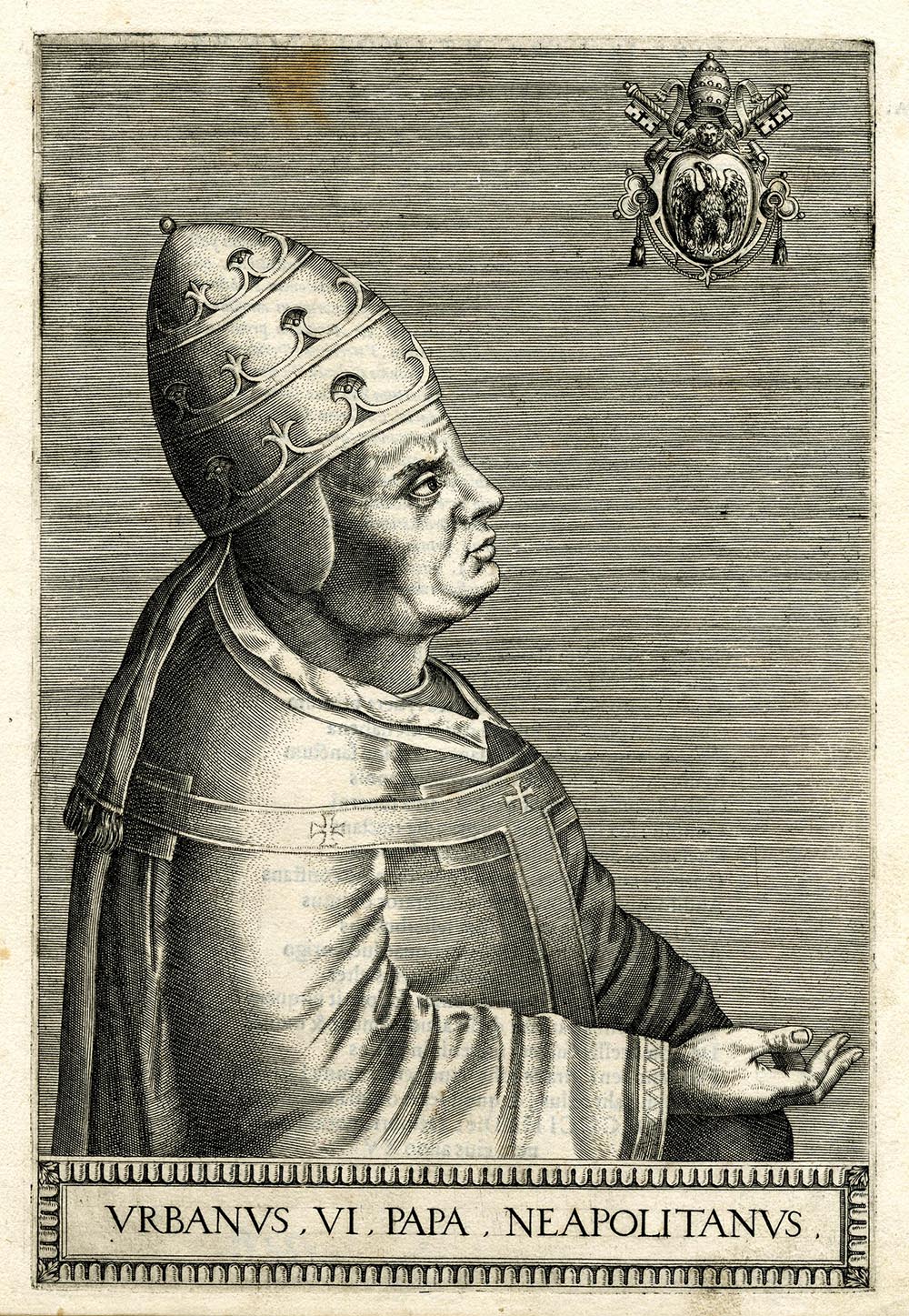
Pope Urban VI

Pope Urban VI. Image courtesy of British Museum (CC BY-NC-SA 4.0)

Urban VI turned out to be impetuous and despotic, and the cardinals who had elected him promptly repented of their choice—especially after Urban turned on them. He told one cardinal to “shut up his ceaseless chatter.” He called another a “blockhead” and humiliated him in front of his colleagues. Angry and bitter, the French cardinals called another conclave and elected a second pope (or, according to Roman Catholics, an anti-pope), Clement VII, saying that Urban’s election had been forced by the Roman mob. Clement, Swiss by birth, moved his court back to Avignon.

Catholic nations split over which pope to obey. Half the church now accused the other half of being heretical, blasphemous, and excommunicate. Catherine of Siena, who had been influential in bringing the papacy back to Rome, denounced Clement as “Judas Iscariot.” Vincent Ferrer, a prominent Dominican preacher in France, applied the same slur to Urban.
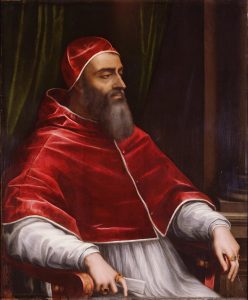
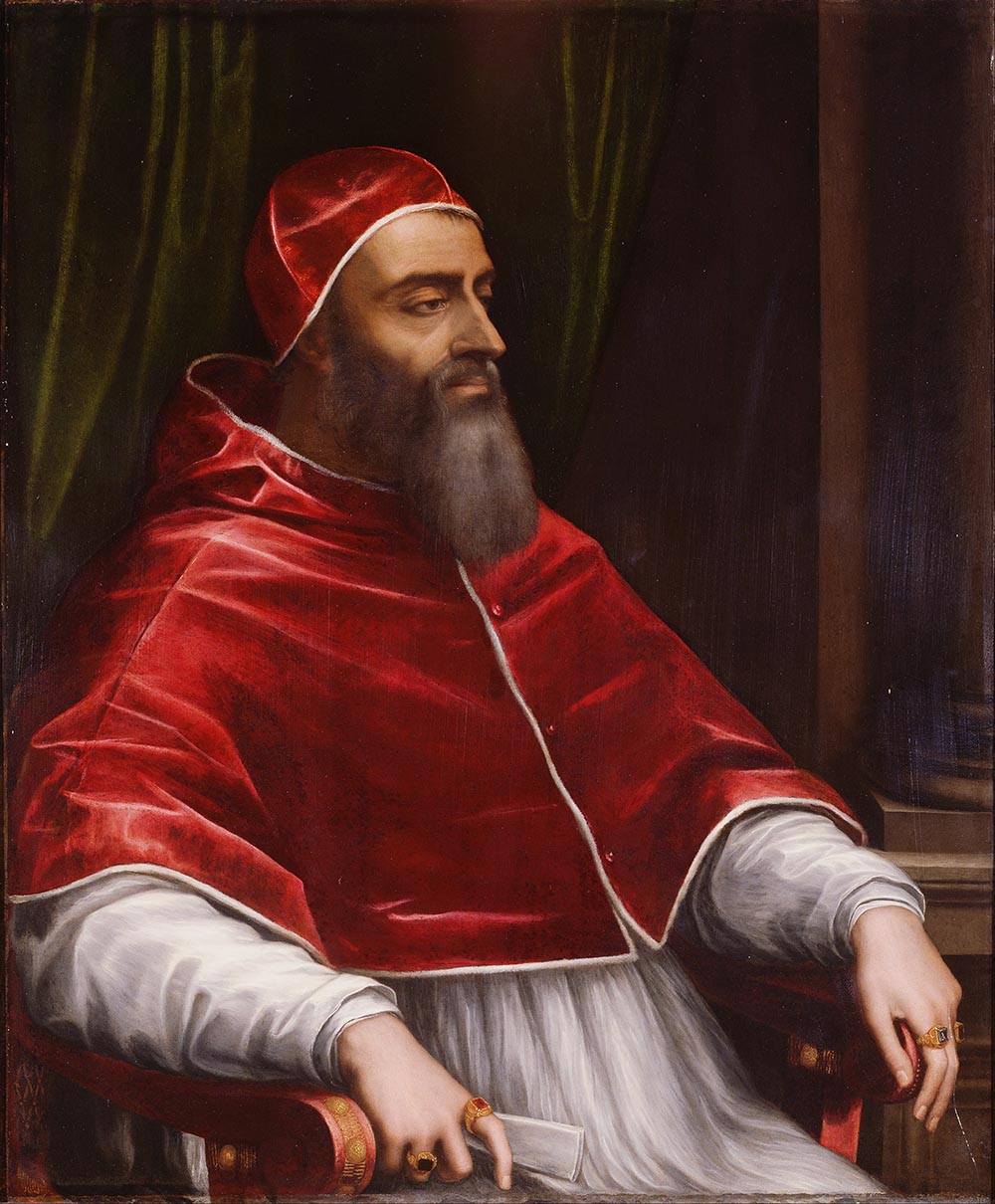
Pope Urban VII

Pope Urban VII. Sebastiano del Piombo (circa 1531). Image courtesy of J. Paul Getty Museum.

Both sides claimed that the sacraments ministered by the priests of the opposite party were invalid— the children who had been baptized were not really baptized, those who had been forgiven their sins were not forgiven, the dying who had received final rites had died unpardoned. And matrimony pronounced by the wrong priest meant that those who thought they were married were actually living in sin.

Hatred and suspicion rose to such a pitch that when seven of Urban’s newly appointed cardinals came to him in 1385 asking him to step down, he had them arrested, tortured, and killed.

When Urban finally died in 1389, Clement anticipated a triumphal return to Rome. Instead, the 14 cardinals who had survived in Urban’s camp elected one of their number to be the new Roman pope, Boniface IX, and the division continued.

“I’ll quit if you will”

 Clement VII died suddenly in 1394, and instead of accepting Boniface, the predominately French cardinals elected a Spaniard, Benedict XIII, to be the new pope in Avignon. King Charles V of France proposed that both popes should resign and a new one be elected, but Benedict would not resign unless Boniface promised to do so as well.

After Boniface died in 1404, the Roman cardinals elected Innocent VII. A revolt broke out, led by prominent Italian families, and Innocent fled to another town. The Roman mob, looking for the pope, sacked the Vatican in 1405, threw the papal registers and historic papers into the streets, stole all the money and gold they could find, and rioted for days.

After the mob cooled down and sobered up, they made their peace with the pope, asking him to come back and forgive them. Innocent returned, then died a short time later.

Innocent was succeeded in Rome by Gregory XII, who invited Benedict to a conference. Benedict offered to resign if Gregory would, but Gregory’s relatives dissuaded him.
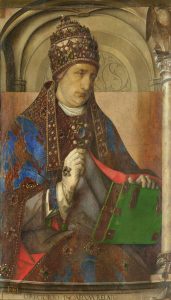
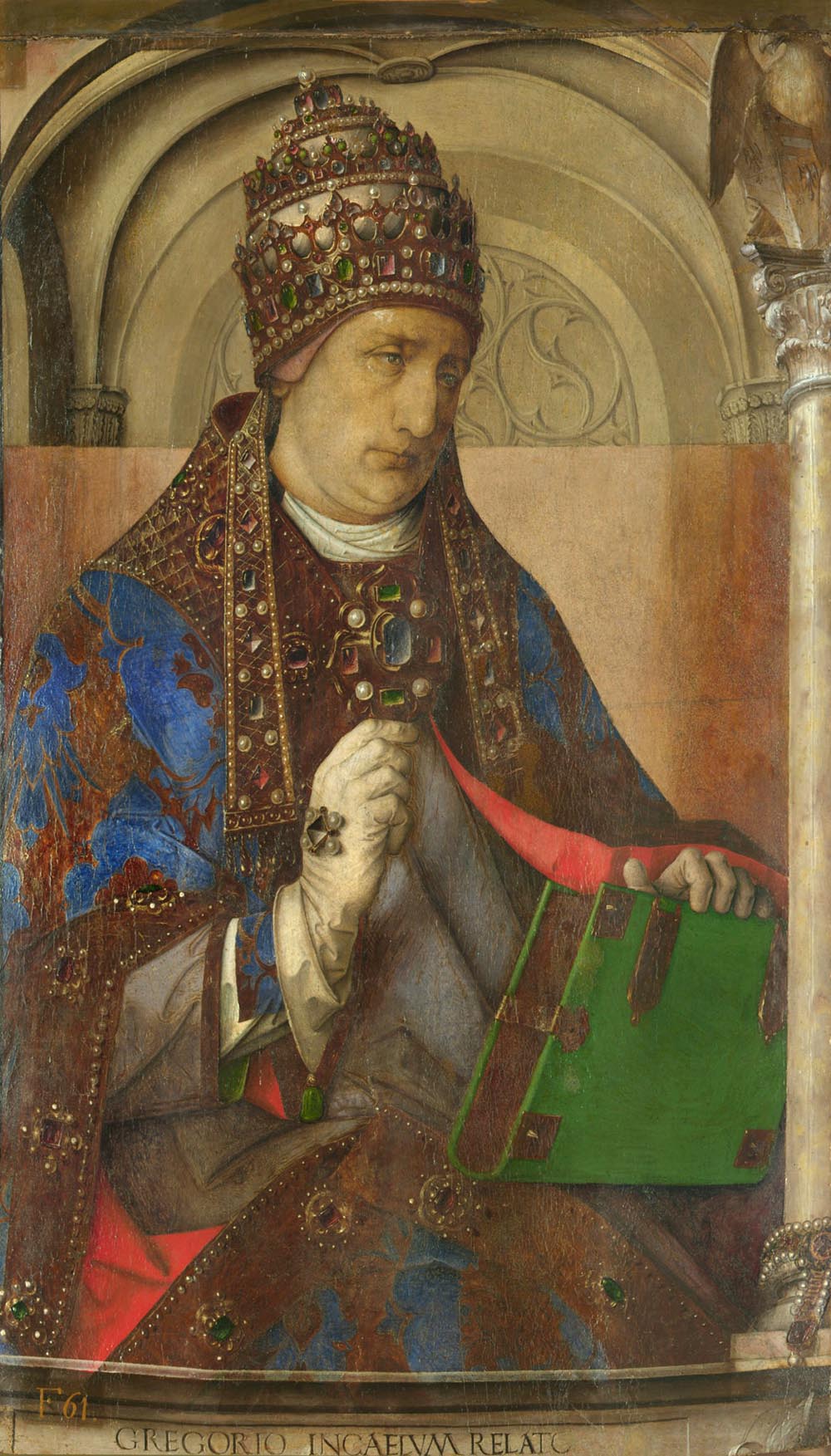
Pope Gregory XII

Pope Gregory XII. Painting by Justus van Gent (circa 1473) – courtesy of Galleria Nazionale delle Marche.

With no end to the schism in sight, some cardinals withdrew to Pisa and called for a general council to elect a pope acceptable to all of Western Christendom and depose the other two.

Church councils still had the potential for this kind of power, for as philosopher and theologian William of Ockham had proposed in the fourteenth century, “The Church is the congregation of all the faithful; the whole has authority superior to any part. It may delegate its authority to a general council of all the bishops and abbots of the church. Such a council should have the power to elect, reprove, punish, or depose the pope.”

The 1409 Council of Pisa was impressive. In a majestic cathedral, 26 cardinals, 4 patriarchs, 12 archbishops, 80 bishops, 87 abbots, the generals of all the monastic orders, 300 professors of canon law, and ambassadors from many governments all appeared. The council declared itself canonical and ecumenical—representing the whole Christian world (minus the Orthodox church). Then it elected Alexander V as the new pope, told him to call another council before 1412, and directed his rivals to resign.

Of course, neither of the existing popes submitted to the council’s authority. The church now had three popes: Alexander V in Pisa, Gregory XII in Rome, and Benedict XIII, who had no supporters (the French cardinals had defected to Gregory) and had fled to Spain. None acknowledged the others.

Empty victories
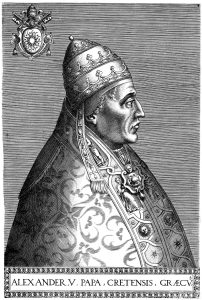
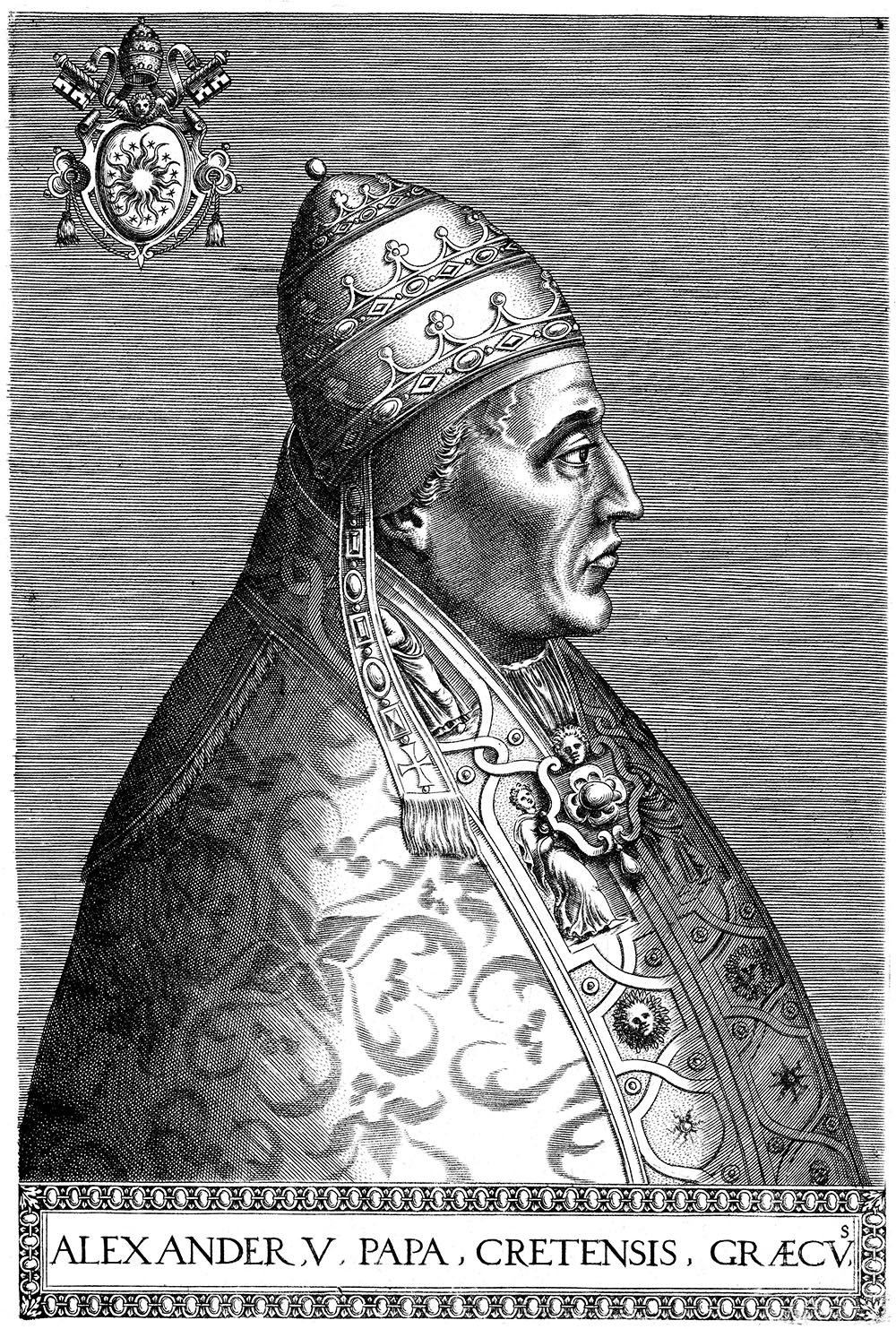
Anti-Pope Alexander V

Anti-Pope Alexander V (ca. 1340-1410). Image courtesy of Pitts Theology Library, Emory University

 Just one year after his election, Alexander V died. Rumors circulated that Balthasar Cossa, who succeeded Alexander as Pope John XXIII, had him poisoned. Such treachery would hardly be out of character.

John, who began his pontificate in Bologna (the king of Naples had seized Rome), presided over that city like the pirate he had once been. He taxed everything, including prostitution, gambling, and usury. According to his secretary, he seduced 200 virgins, matrons, widows, and nuns. He also commanded a private army.
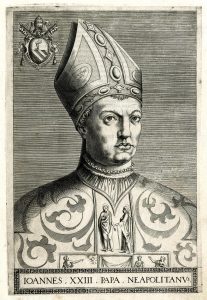
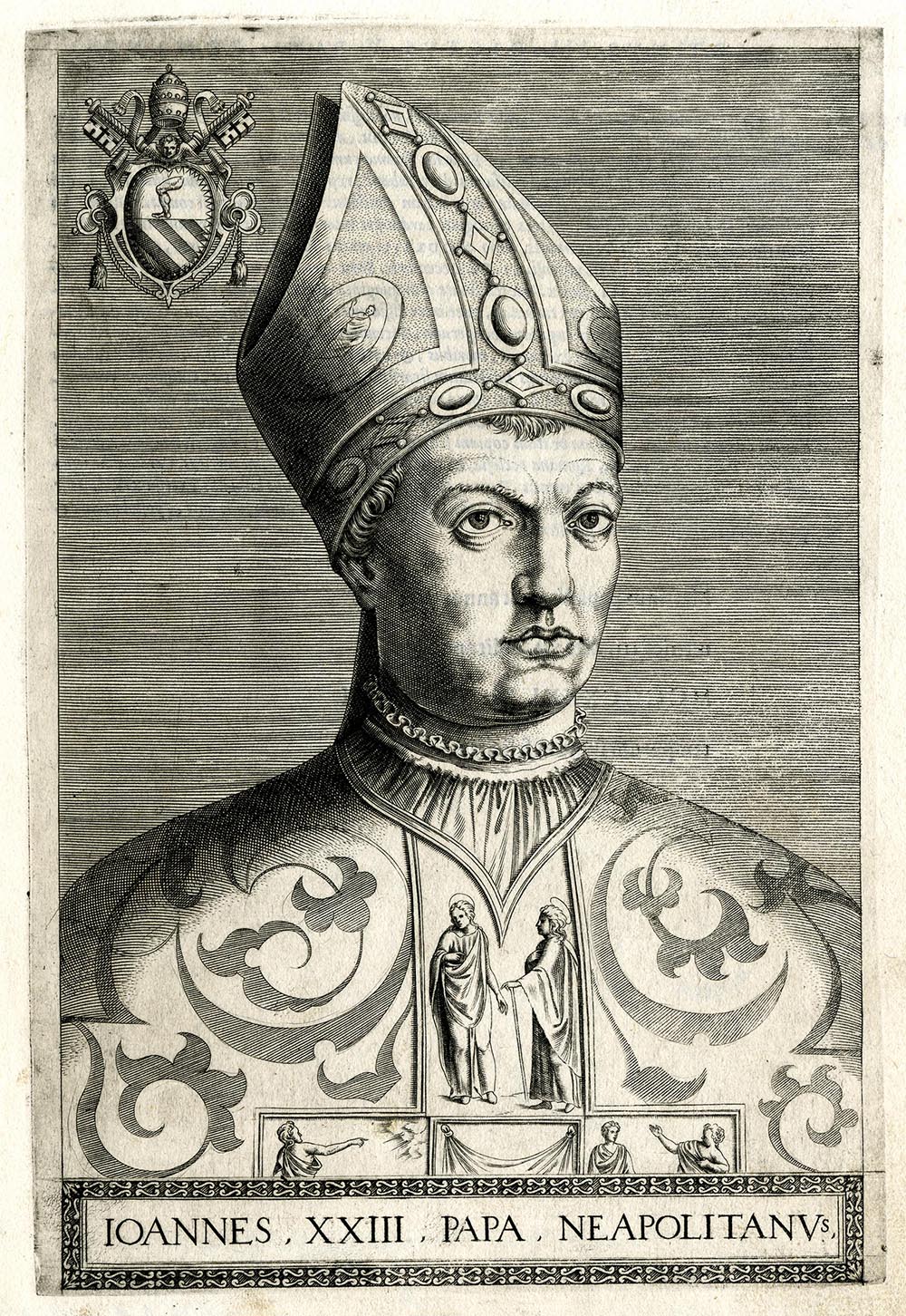
Anti-Pope John XXIII

Anti-Pope John XXIII – image courtesy of British Museum (CC BY-NC-SA 4.0)

John delayed as long as he could in calling the required council, but he was ordered to do so in 1411 by Hungary’s King Sigismund. Sigismund chose Constance, Germany, and set the date for 1414.

Sigismund invited all the prelates, princes, lords, and doctors in the West to attend. Everybody responded except the three popes. So many dignitaries came at their own leisure that six months went by before the assembly could begin. When they all arrived, the clergy and their attendants numbered 18,000—the largest and most complete council since the Council of Nicea in 325.

Constance, normally a small city, was turned into a huge armed camp. Five thousand attended the council itself, while 1,500 prostitutes offered their services after hours.

The council had hardly begun when it lost the support of the pope who had convened it. John was shocked to learn that his enemies were preparing to present a record of his crimes to the assembly. A committee of cardinals advised him to resign. He agreed, read a formal resignation, and fled, disguised as a laborer.

Fearing a repeat of Pisa, the council declared, “If anyone … including also the pope, shall refuse to obey the commands, statutes, and ordinances of this holy council … he shall be subject to proper punishment.” The council then sent a committee to find John and ensure his abdication.

The committee got no answer from John, so 54 charges were presented against him, the least of which were that he was a pagan, an oppressor, a liar, a buyer of church office, a traitor, a lecher, and a thief. Sixteen other accusations were suppressed for being too severe.

On May 29, 1415, the council deposed John, leaving him no claim to Peter’s throne. Broken by the charges, John accepted the decree and was imprisoned for three years.
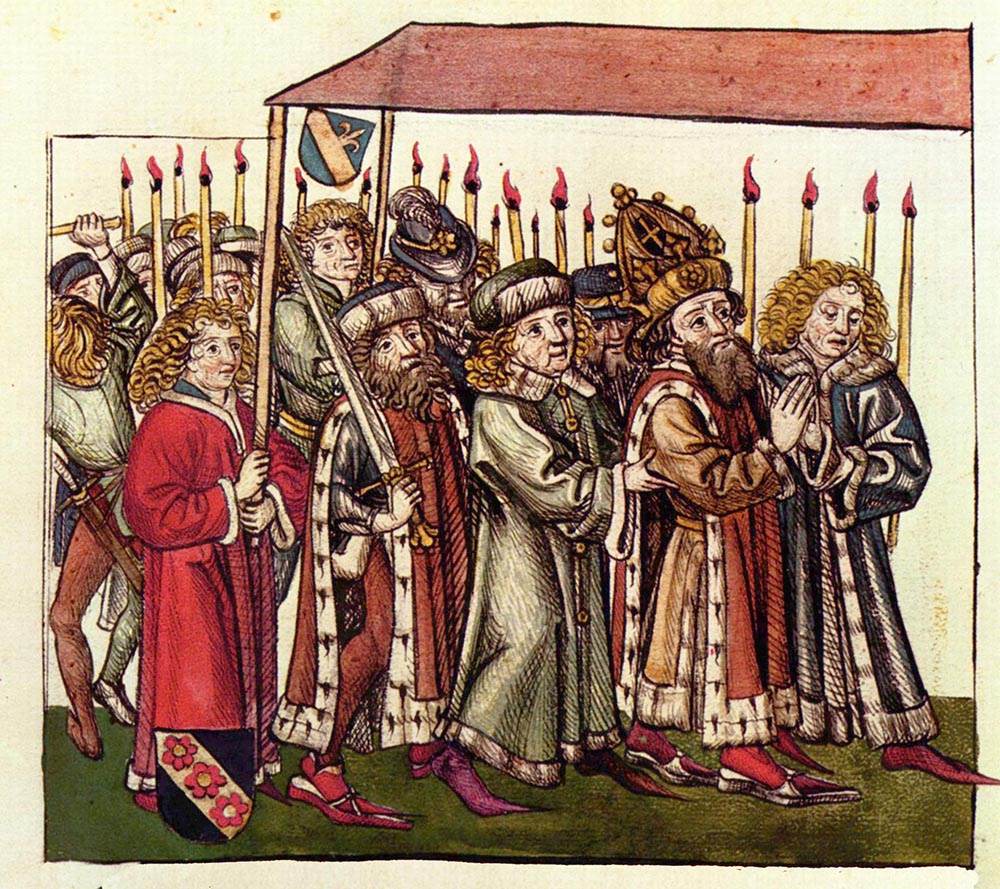
Sigismund at Council of Constance

King Sigismund and Queen Barbara Celjska and daughter, Queen Elisabeth of Luxembourg (wife of Albrecht II at the Council of Constance.


The council celebrated its triumph with a parade through the city of Constance. Then it ordered Benedict and Gregory to resign. Gregory volunteered, on condition he first would be allowed to reconvene the council by his own papal authority. The council assented, and after reconvening, it declared him a valid pope and named him a governor of Ancona in Italy (to give him something official to do for the remaining two years of his life).

Benedict still refused to resign, but since his cardinals had deserted him, he was deposed in 1417. He retired to Spain and died there at age 90, protesting to the end that he was the true pope.
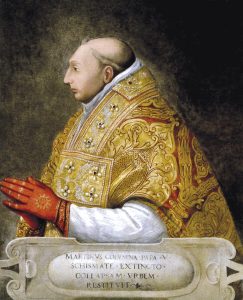
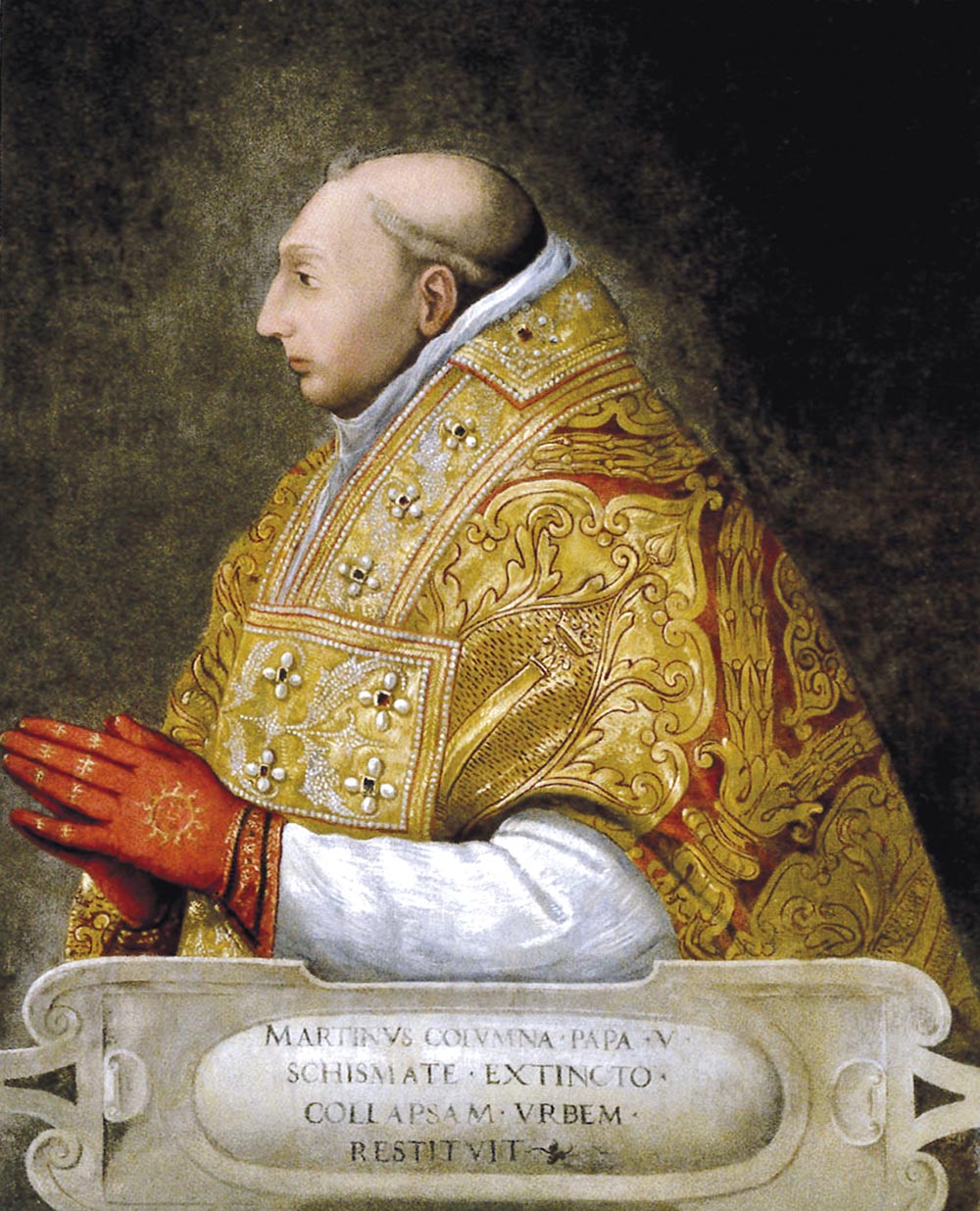
Pope Martin V was selected by the Council of Constance to replace the previous competing popes.

Pope Martin V was selected by the Council of Constance to replace the previous competing popes. 15th century, Galleria Colonna.

In October, the council decreed that another general council should be convened within five years to elect a replacement pope. On November 17, 1417, an electoral committee chose Martin V. All of Western Christendom accepted him, and so after 39 years of chaos, the Great Schism came to an end.

Though the council achieved this victory, it utterly failed in its other purpose: to reform the church. It sent Jan Hus and Jerome of Prague to the stake, delaying widespread reformation for 100 years. It also allowed Martin to play politics and make sure that only minimal reforms, written in obscure language, could be passed.

In 1430, merely 15 years after the council opened, this grim report of the Envoys of the Teutonic Order pointed to more trouble ahead:

“Greed reigns supreme in the Roman court, and day by day finds new devices for extorting money from Germany. … Hence much outcry and heartburnings. Many questions in regard to the papacy will arise, or else obedience will at last be entirely renounced, to escape from these outrageous exactions by the Italians; and this latter course, as I perceive, would be acceptable to many countries.”


Peter E. Prosser is professor of Christian History at Regent University (Virginia) Divinity School.

Posted by bwana in Hus, Middle Ages, 0 comments
Pope Francis commemorates the reformer Jan Hus on the 600th anniversary of his death

Pope Francis commemorates the reformer Jan Hus on the 600th anniversary of his death

Vatican City, 15 June 2015 (VIS) – This morning Pope Francis received in audience the representatives of the Czech Hussite Church and the Evangelical Church of Czech Brethren, in Rome to celebrate a liturgy of reconciliation on the occasion of the 600th anniversary of the reformer Jan Hus, distinguished preacher and rector of the University of Prague, whose execution was lamented by St. John Paul II in 1999, who included him among the reformers of the Church.

”In the light of this consideration” said Francis, ”it is necessary to continue our studies of the figure and work of Jan Hus, which has long been a matter of controversy between Christians, but which has today become a reason for dialogue. This research, conducted without any form of ideological conditioning, will be an important service to historical truth, to all Christians and to society as a whole, even beyond your national borders.”

”Today’s meeting gives us the opportunity to renew and deepen the relations between our communities” he added. “Many disputes of the past ask to be revisited in the light of the new context in which we live, and agreements and convergences will be reached if we face the traditional contractual questions with a new outlook. Above all, we cannot forget that the shared profession of faith in God the Father, in the Son and in the Holy Spirit, in which we have been baptised, already unites us in bonds of authentic fraternity.”

”Vatican Council II affirmed that ‘every renewal of the Church is essentially grounded in an increase of fidelity to her own calling. Undoubtedly this is the basis
of the movement toward unity. Church renewal has therefore notable ecumenical importance’. Nowadays, in particular, the need for a new evangelization of many men and women who seem indifferent to the joyful news of the Gospel makes it urgent to renovate every ecclesial structure so as to promote a positive response from all those to whom Jesus offers His friendship. And visible communion between Christians will certainly make this announcement more credible”

“Responding to the call of Christ to continual conversion, of which we are all in need, we can progress together on the path of reconciliation and peace. Along this road let us learn, by God’s grace, to recognize each other as friends and to consider the motivations of others in the best light possible. In this sense I hope that bonds of friendship may develop also at the level of local and parish communities. With these sentiments, I join spiritually in the penitential liturgy you will celebrate here in Rome,” concluded the Holy Father. “May God, rich in mercy, grant us the grace to recognize ourselves all as sinners and to know how to forgive each other.”

Hear the story from Radio Prague International.


In the original post of this article, we inadvertently used a photo of Pope Francis copyrighted by Reuters that was published with the Vatican Information Services article.  We have removed that photo permanently and apologize for the error.

Posted by bwana in Hus, Hussite Wars, 0 comments